 EN − TL
.png)

Ayasofya Book from Demirören Publishing
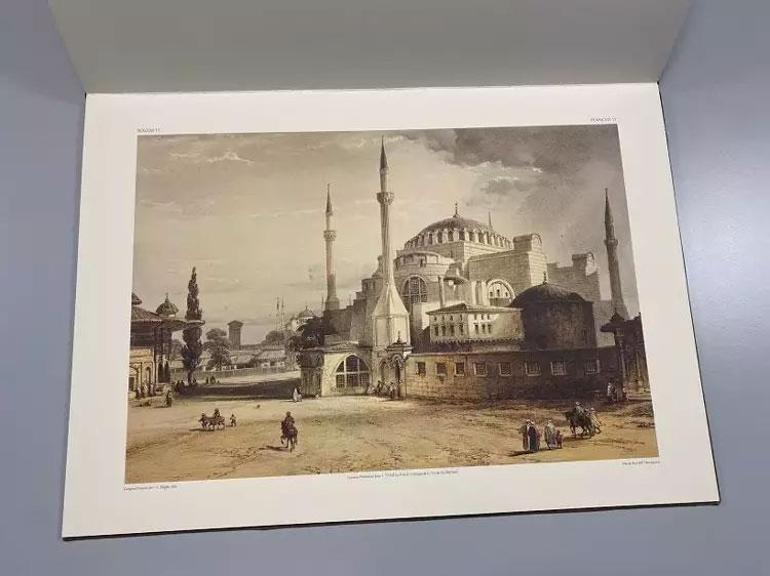
Engravings depicting the repairs by the Fossati brothers, who were commissioned by Sultan Abdülmecid to restore Hagia Sophia Mosque, along with images showing the building before the restoration, have been compiled into a book. Demirören Publishing has republished Ayasofya, a facsimile of the engravings presented to Abdülmecid, in its original dimensions.
Italian architect brothers Gaspare Fossati and Giuseppe Fossati were appointed by Sultan Abdülmecid in 1847 to restore Hagia Sophia Mosque. During the restoration, the brothers added features such as the arrangement of the Hünkâr Entrance façade, the Hünkâr Mahfili (Imperial Loge), the Kasr-ı Hümayun (Imperial Pavilion), and the Hagia Sophia Muvakkithane (Clock Room). After the restoration, Gaspare Fossati published in London, with Abdülmecid’s support, an album containing his drawings. These engravings documenting the Fossati brothers’ restoration provide important information and evidence about the history of Hagia Sophia Mosque’s repairs.
FACSIMILE OF THE HAGIA SOPHIA ALBUM PUBLISHED
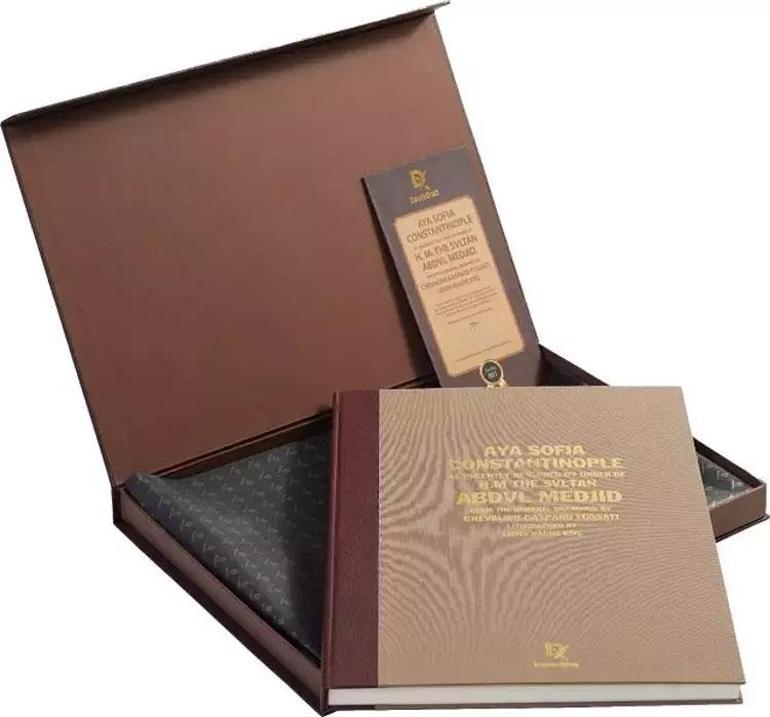
The Ayasofya book, published in two languages—French and Turkish—by Demirören Publishing using the facsimile technique, is printed in large format, presented in a special box, and comes with a personalized certificate. Inside the book are 25 engravings drawn by Gaspare Fossati. Authors and historians say the Ayasofya book is a very important historical document because it allows comparisons between the repairs and restoration process of that time and the present day.
Researcher-writer Erhan Altunay and archaeologist Dr. Murat Sav shared important information about Hagia Sophia Mosque and the Fossati brothers’ repairs.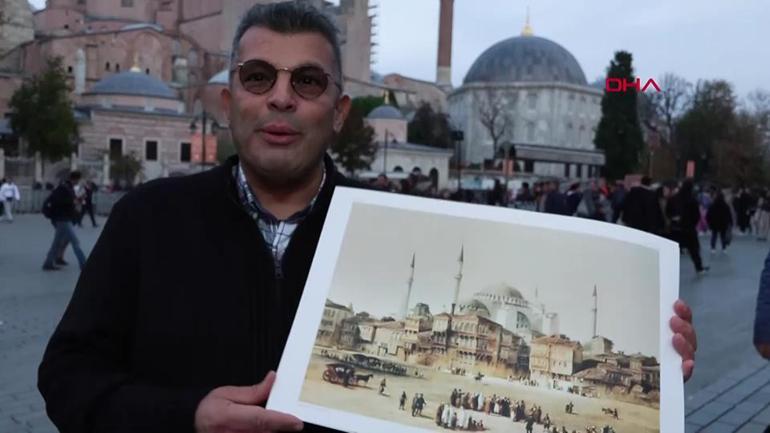
ALTUNAY: WE HAVE DOCUMENTS AS VALUABLE AS PHOTOGRAPHS
Describing Hagia Sophia Square, researcher-writer Erhan Altunay said:
“There used to be temples here, the Baths of Zeuxippos, and many other buildings. This was a large square. No trace of those days remains. But we are very lucky because in the book in which the Fossati brothers described Hagia Sophia for Abdülmecid, we have documents as valuable as photographs. We know the state of the 19th century very well. In this important book published by Demirören Publishing, one thing we see is buildings in the area. At that time, there was actually the Hagia Sophia Neighborhood. People lived here. Over time, during the reigns of Abdülmecid and Abdülaziz, they were completely demolished, and no trace remains today. The best evidence we have of these vanished buildings are the engravings we find in this book.”
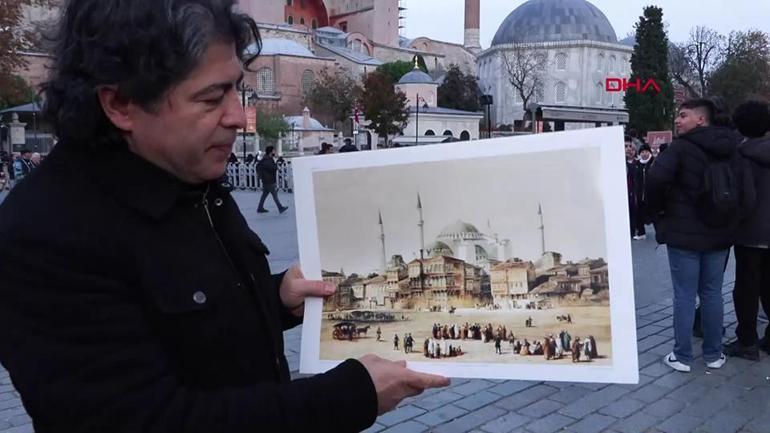
DR. SAV: ONE OF THE BEST SOURCES ARE HIS OWN DRAWINGS
Archaeologist Dr. Murat Sav said:
“One of the best sources to consult for comparing both the before and after of the restoration carried out by the Fossati brothers between 1847 and 1849 during Sultan Abdülmecid’s reign is the set of drawings they made themselves. For example, in one of these images, it is quite possible to see the changes made to Hagia Sophia’s exterior. We see that in Gaspare Fossati’s restoration work between 1847 and 1849, he first depicted the structure before the repairs. In one image, when looking at the façade, we see the exterior walls finished with only a single-colored plaster. At the ends of the weight towers, the roofs end in gabled structures sloping to two sides.”
However, when looking at a later image after the restoration, the entire façade is treated with yellow and red jointing, and the tops of the weight towers have been altered into semi-circular shapes. All of this gives us information about the details and techniques of Fossati’s restoration. We also know that four additions were made to the buttresses surrounding the dome from the outside. Thus, Fossati’s depiction of his own restoration also carries documentary value for interpreting the work today.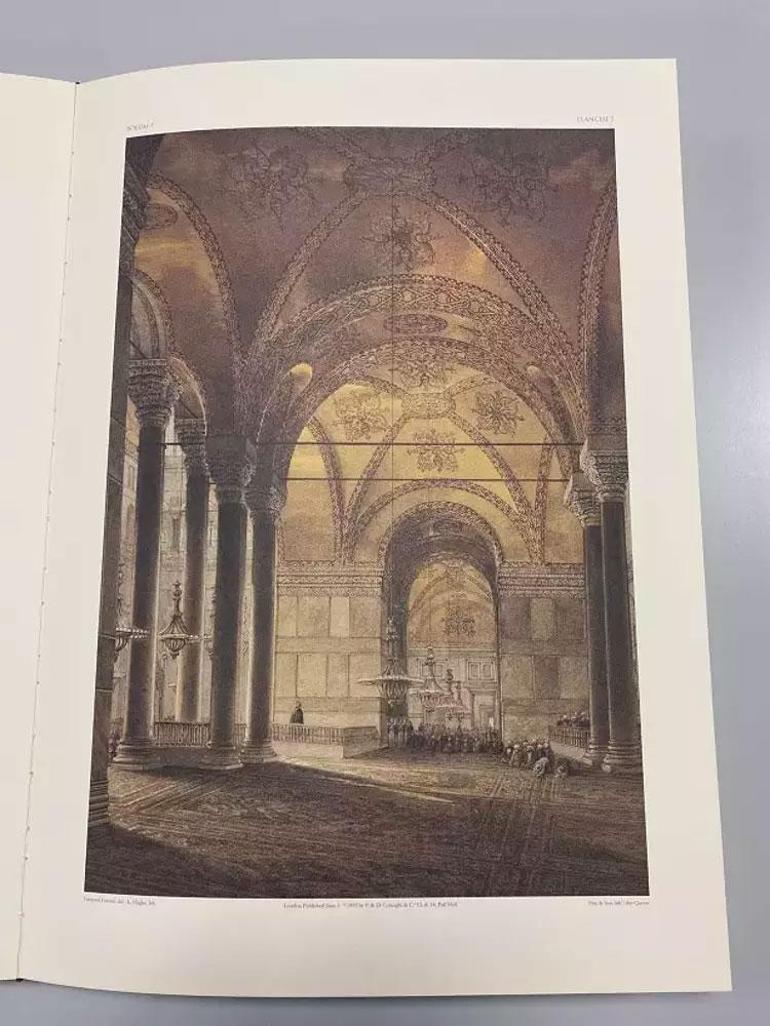
ALTUNAY: UNTIL THE 1930s, THIS MOSAIC WAS COVERED
Speaking about a door once used as the entrance to Hagia Sophia Mosque, Altunay said:
“We are at the door that is now an exit but was once used as an entrance, even the door through which Sultan Mehmed the Conqueror entered. This is a place famous for its mosaic. At one time, until the 1930s, this mosaic was covered. In the Fossati book, we can see this very clearly.”
DR. SAV: IT BEARS THE TRACES OF THE FOSSATI PERIOD REPAIRS
Dr. Sav said:
“There is a beautiful aspect to this door. It was originally from a pagan temple in Tarsus, then, after a restoration in Hagia Sophia, it was brought here. Directly opposite is a magnificent mosaic panel. This panel depicts Emperor Constantine and Emperor Justinian, with the Virgin Mary and her son Jesus in the center. On the Virgin’s right is Justinian, holding Hagia Sophia in his hands. This depiction beautifully reflects the architectural identity of Hagia Sophia of that time, almost in its original form. On the other side is Emperor Constantine presenting a model of the city of Constantinople. This area also bears the traces of the Fossati period repairs. Where there is no marble on the walls, marble imitation was applied over plaster. During the Fossati restoration, the structure was addressed both in terms of strengthening and as a whole architecturally.”
ALTUNAY: THERE ARE TRACES OF FOSSATI HERE
Standing in front of the marble door depicted in Fossati’s drawings, Altunay said:
“We are in front of the marble door in Hagia Sophia. In Fossati’s drawings, this place looks beautiful. One interesting detail is that, if you look closely, you see the marble exposed and no carpet on the floor. At that time, prayers may have been held here occasionally, but generally, this was not a prayer area. It was more a space where people sat, talked, and read the Quran—a more relaxed area. This gives us a nice clue about its use. There are traces of the Fossatis here.”
DR. SAV: HE ALIGNED THE COLUMNS
Dr. Sav said:
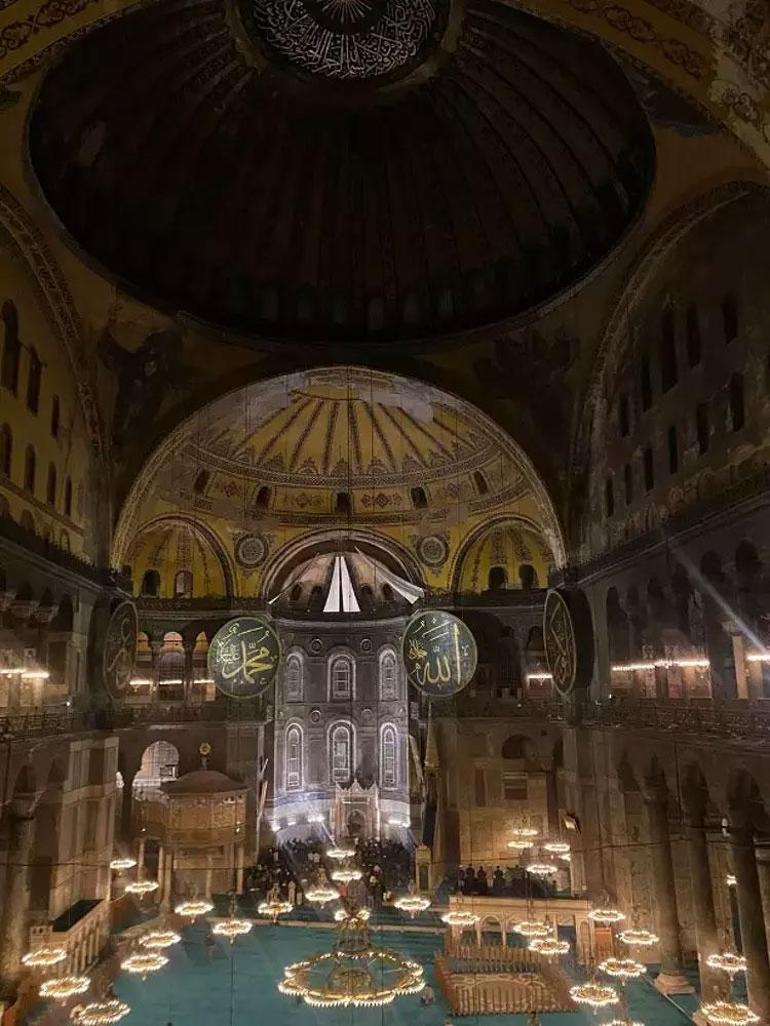
“During the restoration, Fossati also left deep marks in Hagia Sophia. For example, in the course of strengthening works, he signed his work by replacing and renewing the bases of 12 columns and aligning the columns, as they had shifted slightly under the load. Nearly all of the painted decorations you see were retouched in that period. Inside, Fossati left deep marks—there are the very large Çihar-yar-ı Güzin medallions and calligraphies written by Mustafa İzzet Efendi in the 19th century, which took their place in the mosque. He also worked on the angels inside, preserving them but covering their faces. Most of the mosaics had been open until the first half of the 18th century, up to the 1730s, when during restoration they were covered with a thin layer of whitewash. They were uncovered again during the Fossati restoration.”
"REPUBLICATION BY DEMİRÖREN PUBLISHING IS A MAGNIFICENT WORK"
Speaking about the dome, Dr. Sav added:
“To strengthen the dome, he encircled the base of the dome with a chain. The restoration of that period appears extensively in Fossati’s drawings, so in some respects, both socially, in terms of the building’s use, and structurally, it contains very important details. In fact, this book was published in London in 1852 with the support of Sultan Abdülmecid. The fact that it has now been republished as a special album by Demirören Publishing is a magnificent work. This allows a clearer comparison of what was done during the restoration, both then, before, and now.”
"HAGIA SOPHIA CONTINUES TO LIVE"
Dr. Sav said:
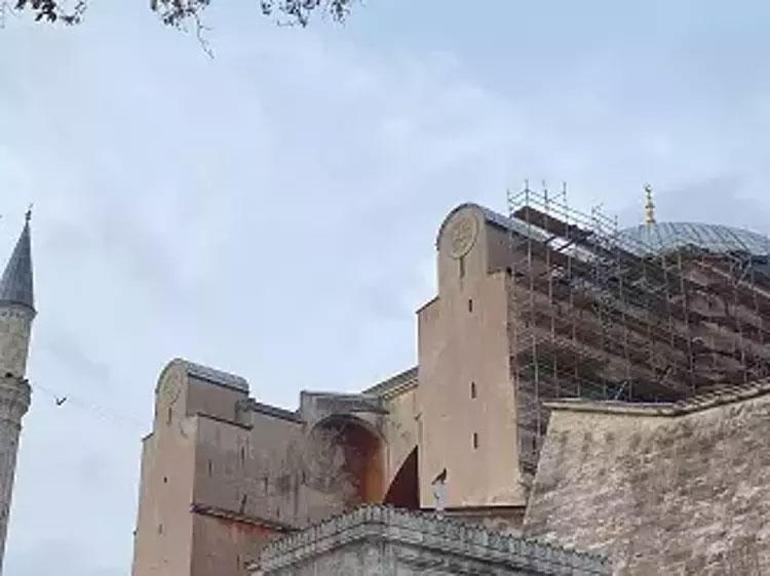
“During the Fossati restoration, the existing imperial loge was replaced with a new one, generally considered to be in the neo-Byzantine style. It is known that three of the columns supporting the loge came from the courtyard of the Fatih Mosque, where they had long been unused. The loge contains magnificent ornamentation. Also during this restoration, the windows in the apse wall of the mihrab section were repaired. After the work was completed, the opening was held on July 13, 1849. It is estimated that about a thousand workers were involved in the restoration. Hagia Sophia has had a long journey—from Late Antiquity, through various Byzantine periods, numerous Ottoman interventions, notably the restorations by Mimar Sinan. Even after 1,500 years, Hagia Sophia continues to live on, with materials from antiquity, marble jars brought from Pergamon, and spolia from different eras.”


İlahi Çizgiler: Hat Sanatının Öncüleri’ kitabı okurlarla buluştu
Demirören Yayınları, Prof. Dr. Süleyman Berk’in hazırladığı ‘İlahi Çizgiler: Hat Sanatının Öncüleri’ adlı eseri okurlarla buluşturdu. Eser, geçmişten günümüze hat sanatına yön veren büyük ustaların hayatlarını, eserlerini ve estetik miraslarını bir araya getiriyor. Kitapla ilgili konuşan Prof. Dr. Süleyman Berk, “Hat sanatının gelişiminde bir hocadan meşk almak çok önemlidir. Bu birinci yoldur. Ancak ikinci yol da ondan ayrılmaz: Eskiden yapılmış güzel eserleri incelemek. Bu nedenle, kitabın hat sanatı yolculuğuna çıkan sanatçılar için yol gösterici olacağına inanıyorum. Demirören Yayınları da bu kitabı özenli bir şekilde basarak önemli bir hizmet yerine getirdi. Benim de temennim, bu eserin okuyucular için faydalı olmasıdır” dedi.

The book "Syria in the Era of Sultan Abdulhamid II", depicting Syria through photographs taken about 130 years ago, has been published.
The book "Syria in the Era of Sultan Abdulhamid II" , featuring photographs from Ottoman-era Syria, has been presented to history enthusiasts by Demirören Publishing. Containing texts in Turkish, English, and Arabic, the book includes 200 black-and-white and colorized photographs specially compiled from the Yıldız Photography Albums, prepared by order of Sultan Abdulhamid II. The work showcases documentary photographs ranging from the construction process of the Hejaz Railway to the old streets of Damascus, from the magnificent caravanserais of Aleppo to the silent ancient cities of the desert

Beauties of the Bosphorus Meets Readers Once Again
The masterpiece Beauties of the Bosphorus by English author Julia Pardoe has been republished by Demirören Publishing in a special edition enriched with 80 color engravings. Speaking about the book, Emin Nedret İşli, President of the Antiquarian Booksellers’ Association, said: “It is a very special, valuable, and rare book that depicts all the past beauties of Istanbul both through Pardoe’s writings and through the engravings made by Bartlett. With its orientalist perspective portraying the beauties of Istanbul and the East, this book has attracted great interest both in the West and in the East.”

Kariye Chora: A Story of Transformation from Church to Mosque has been published.
The stories depicted on the walls of the Chora Church (Kariye Mosque)—considered the last masterpiece of Byzantine art and given its present form in the 14th century by one of history’s greatest patrons of the arts, Theodoros Metochites—have been compiled into a book. Published by Demirören Publishing, Kariye Chora: A Story of Transformation from Church to Mosque presents the narratives illustrated in its mosaics and frescoes. The bilingual edition (Turkish and English) contains 60 stories accompanied by nearly 100 photographs. Archaeologist Dr. Murat Sav stated: “The Renaissance in Italy had, in a sense, already begun in this church during the Byzantine era. Figures began to grow in size and elongate in form. There is no other building in Byzantium with such intense visual and iconographic detail. Here, there are very special elements. The mosque is surrounded by paintings and mosaics depicting some of the miracles of Mary and Jesus. Chora is a truly unique structure, and for this reason, it must be understood correctly both in a touristic and cultural sense.”

A facsimile edition has been published of the book by French architect Melling, depicting 19th-century Istanbul and the harem.
During his tenure, architect Antoine Ignace Melling—one of the rare foreigners granted the privilege of entering and depicting the harem after being received by Hatice Sultan, the sister of the sultan—created engravings of Istanbul and the Bosphorus shores, preserving the natural appearance of 19th-century Istanbul for future generations. Melling compiled these engravings, which vividly reflect the spirit of the era, into a book published in France in the early 1800s. Demirören Publishing has now released a facsimile edition of this work, published in Turkish, English, and French.

A book detailing the history of the Krepen Passage has been published.
The history of the Krepen Passage has been published under the title Where is Krepen Passage? , accompanied by numerous documents and images—many of them published for the first time. In this work, author Ümit Nar, through Turkuaz Sahaf Publishing, revives a forgotten scene from the history of Beyoğlu with the meticulousness of an antiquarian. The book narrates in detail—like a “paper archaeologist”—the Krepen Passage, known today as Aslıhan Passage, with its restaurants, tradespeople, antiquarian booksellers, regular patrons, social events, and its contributions to Beyoğlu’s literary and cultural life.

"Interest in Antiquarian Bookshops is Growing"
At the Sahaflar (Antiquarian Booksellers) Festival held in Üsküdar Square, around 43 antiquarian booksellers set up stalls. Visitors from various regions—including İzmir, Ankara, the Turkish Republic of Northern Cyprus, and Erzurum—flocked to the event. Emin Nedret İşli, President of the Antiquarian Booksellers’ Association, said: “As antiquarian booksellers, we are very pleased with this event. Rising book prices have affected the book trade in general, but for antiquarian booksellers the picture is somewhat more optimistic. Some books in second-hand shops, especially out-of-print editions, can be more affordable compared to the current prices in the new book market. Interest in antiquarian bookshops has been growing, particularly among young people, students, and dedicated book lovers.”